Black Cat Font: Crafting Whimsical Feline Branding
Where Every Letter Tells a Tails
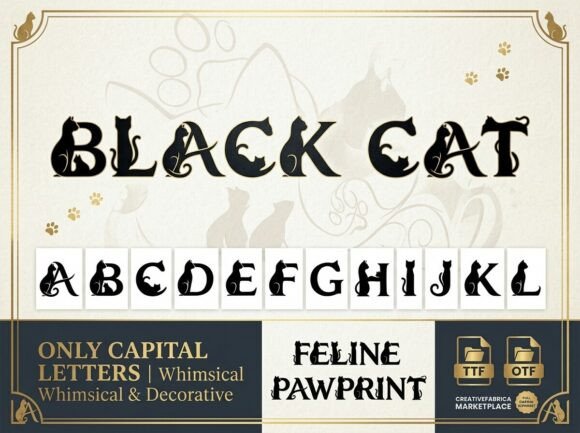
There is a specific challenge in design when the subject matter is playful, yet the execution needs to feel premium. We often see cat-themed branding fall into the trap of being overly childish or kitschy. However, the Feline Pawprint typeface—marketed specifically as the Black Cat font—bridges that gap with remarkable elegance. It functions as a decorative serif, but it does so with a narrative depth that standard serif fonts simply cannot achieve. By integrating feline silhouettes and paw motifs directly into the anatomy of the letterforms, this font turns every headline into a piece of illustrative art.
For a designer or business owner, the visual personality here is distinct. It isn't a rigid geometric typeface; it has a whimsical, storybook quality. The strokes are defined, offering the legibility of a display font, but the terminals and serifs often morph into ears, tails, or paws. This creates an immediate emotional connection. When you use Black Cat, you aren't just spelling out words; you are signaling a specific brand ethos that is sophisticated yet fun. It moves the viewer away from the sterile feel of modern typography and into a warmer, more character-driven space.
Strategic Applications for Brand Identity
Understanding where to deploy a creative font like this is crucial for maintaining brand identity consistency. Because Black Cat is a highly stylized display font, it demands attention. It is rarely the right choice for body copy where dense information is required, but it shines brilliantly in high-visibility contexts.
Consider the pet boutique sector. A logo design utilizing this typeface immediately communicates a boutique atmosphere rather than a generic big-box store. The font suggests curation and care. For veterinary clinics, particularly those focusing on feline care, using this font in branding materials helps soften the clinical anxiety pets and owners might feel. It injects a sense of comfort and approachability into the brand identity.
Beyond animal-centric businesses, Black Cat finds a natural home in Halloween event stationery. However, it avoids the "scary" trope. Instead, it leans into the mystical and whimsical side of the season. It works exceptionally well for upscale autumnal events, mystery dinner parties, or themed packaging where you want a spooky vibe that is still charming. For cat-themed merchandise—from tote bags to t-shirts—the font acts as a standalone graphic element, reducing the need for complex illustrations while maximizing visual impact.
Technical Considerations for Designers
When integrating Black Cat into your workflow, you have to think about font pairing. Because the typeface is ornate, pairing it with a heavy or complex font will result in visual chaos. The best practice is to contrast the whimsy of the cat motifs with a clean, grounded sans serif font. A geometric sans serif or a simple grotesque typeface works well for subheadings and body text, allowing the Black Cat headers to be the "hero" of the layout.
Readability is another key factor. While the letterforms are distinct, the decorative elements can obscure legibility if the text is too small. Always use this typeface at larger sizes for logo design, headers, and pull quotes. If you are working on editorial design for a pet magazine, use it for the masthead and section dividers, but switch to a highly legible serif font or sans serif font for the columns.
From a technical standpoint, ensure you review the included styles. Many premium fonts like this include alternate characters or ligatures that allow you to customize how the cat motifs appear. You might want to swap out a specific letter to avoid two cat silhouettes sitting too close together, which can look cluttered in packaging design. Testing these alternates in your web design mockups before finalizing a print run is essential to ensure the "story" flows correctly.
Elevating Digital and Print Presence
The versatility of Black Cat extends across both digital and print mediums, though the application differs slightly. In web design, this font is excellent for hero sections or promotional banners for e-commerce sites selling pet supplies. It captures the "scroll-stopping" power needed in a crowded digital marketplace. However, ensure your web font files are optimized; decorative fonts can be heavier than standard text fonts, so lazy loading or strategic subsetting might be necessary for site speed.
In social media graphics, personality wins. The algorithm favors engagement, and a font that sparks curiosity or a smile is a powerful tool. Using Black Cat on Instagram stories or Pinterest pins for DIY cat care tips or product launches adds a layer of professionalism that standard system fonts lack. It signals to your audience that you invest in your content and care about the aesthetic experience.
For print, specifically packaging design, the tactile nature of the font comes alive. Imagine a matte finish box for organic cat treats with the logo stamped in foil using the Black Cat typeface. The intricate details of the serifs and the hidden pawprints catch the light in a way that creates a tactile, premium feel. It transforms a simple box into a design asset that customers might even keep for storage.
Making the Decision to Adopt
Choosing a commercial font is an investment in your visual language. When evaluating Black Cat, look beyond the novelty. Assess the kerning (the spacing between letters) to ensure it looks balanced in your specific headlines. Check the licensing terms to ensure they cover your specific usage—whether that is for physical merchandise, digital ads, or software embedding.
Ultimately, Feline Pawprint (Black Cat) is not just a novelty item; it is a specialized design asset